Cat Introductions Going Badly? Choose an Easier Next Step
Use a context-and-response record to step back during cat introductions, protect access to resources and identify when veterinary or behavior help is needed.
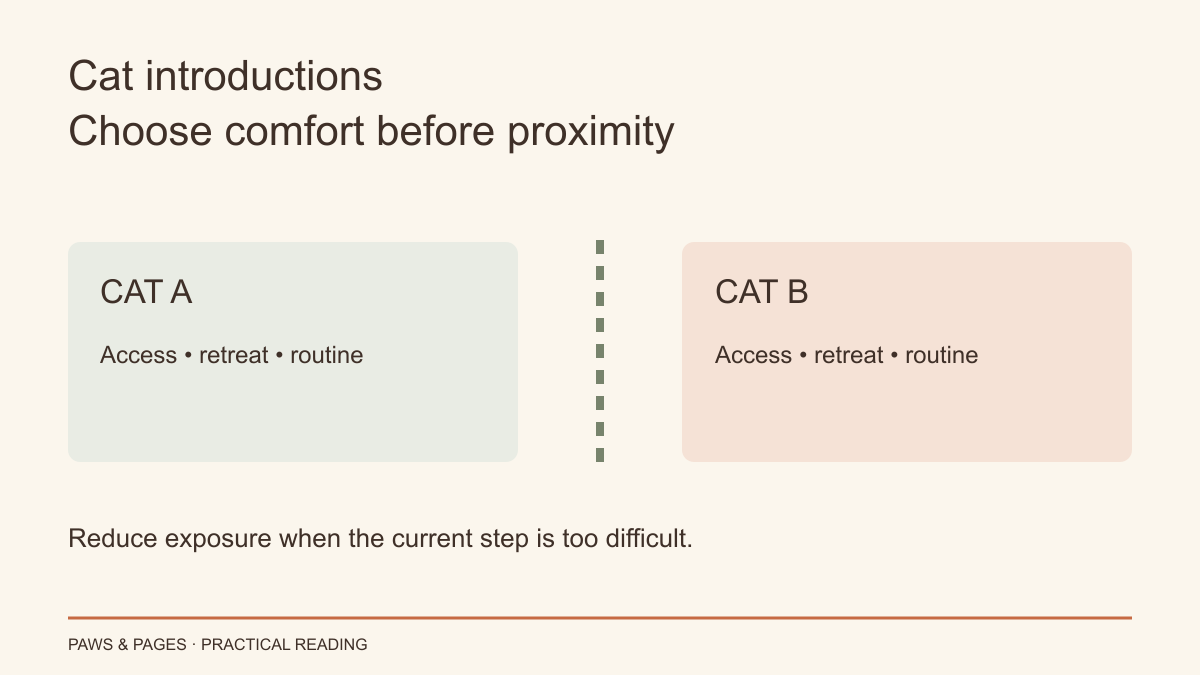
The new cat is behind a door, the resident cat keeps watching it, and the household wonders whether to let them “sort it out.” A successful introduction is not measured by how soon the door disappears. The useful question is whether each cat can go about ordinary activities without pressure from the other.
Choose a more comfortable introduction step
- Record access to resources and avoidance as well as overt conflict.
- Describe setup, response and recovery without provoking another meeting.
- Reduce exposure and seek advice about a safe arrangement if comfort or safety is uncertain.
A checked task is not evidence of friendship. Injuries and health changes need veterinary attention.
Look beyond obvious fighting
The 2024 AAFP intercat tension guidelines describe tension that can include avoidance and restricted access, not only overt conflict. They recommend a prepared environment and gradual introduction, including a transition room for the new arrival. Their clinical framework does not establish a fixed number of days in which unfamiliar cats must become comfortable. [1]
Notice where each cat eats, rests and uses resources. A quiet cat remaining in one corner is not automatically relaxed. Record whether a doorway, corridor or another cat's position changes its movement. Do not create an encounter to determine which animal is dominant.
Record the step that became difficult
Use four headings: setup, response, recovery and next adjustment. For example, “brief visual access through a barrier; resident stared while newcomer retreated; ordinary movement resumed after visual access ended” describes a hypothetical event. It supports a question about reducing exposure; it does not diagnose the motivation or certify the next attempt as safe.
Check whether the arrangement lets each cat withdraw and reach its own resources. A barrier is not useful merely because claws cannot pass through it if an animal remains trapped in view. Ask the professional advising you which separation and resource arrangement fits your home.
Make the next attempt easier, not longer
Stepping back can mean returning to separation, reducing visual access or changing the location of a resource. Preserve comfortable routines while seeking advice. Change one feature at a time where practical so you can describe what made a difference. Do not lure a frightened cat closer simply to complete a checklist.
AAHA's explanation of the guidelines emphasizes recognizing conflict and using environmental and, where appropriate, behavioral management. A plan should address both animals' access and comfort rather than treating one as the sole problem. [2]
Define the stopping point before another meeting
Injuries, repeated chasing, inability to maintain safe separation or persistent changes in eating or elimination need professional help. Seek veterinary assessment for health changes rather than assuming every change is social. Do not reach between fighting cats; ask your veterinary or behavior professional how to manage an incident safely in your circumstances.
Keep the introduction record in My Pet Desk and use New Pet Path for household preparation. A checked box records your action, not the cats' friendship. Some arrangements require longer-term management; the aim is safe, tolerable everyday life, not a staged photograph of animals sharing a bed.
Sources and further reading
Editorial source notes dated . These source notes support the topics listed below; their date is separate from the article update shown above. This is not a veterinary review or individual medical advice.
Sources checked November 6, 2026; publication dates of sources may be older. Worksheets and hypothetical examples are editorial teaching aids, not individual clinical, legal or insurance advice.
- Rodan et al.: 2024 AAFP intercat tension guidelines — Subtle tension, environmental preparation and gradual introductions.
- AAHA: Addressing tension among cats — Recognition, environmental support and management.
More in Training & Behavior
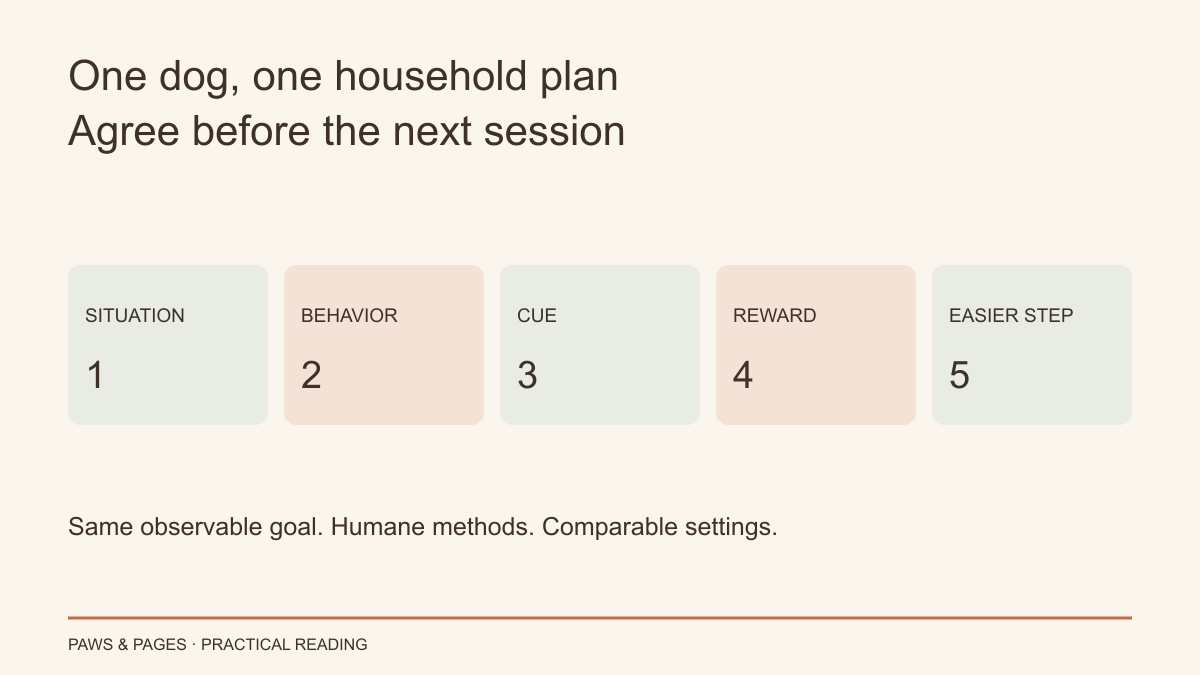
All Training & Behavior →One Dog, Several Trainers: Agree on a Household Training Plan
Resolve conflicting household training rules with one observable goal, a shared cue and a reward record, without blaming the dog for unclear instructions.
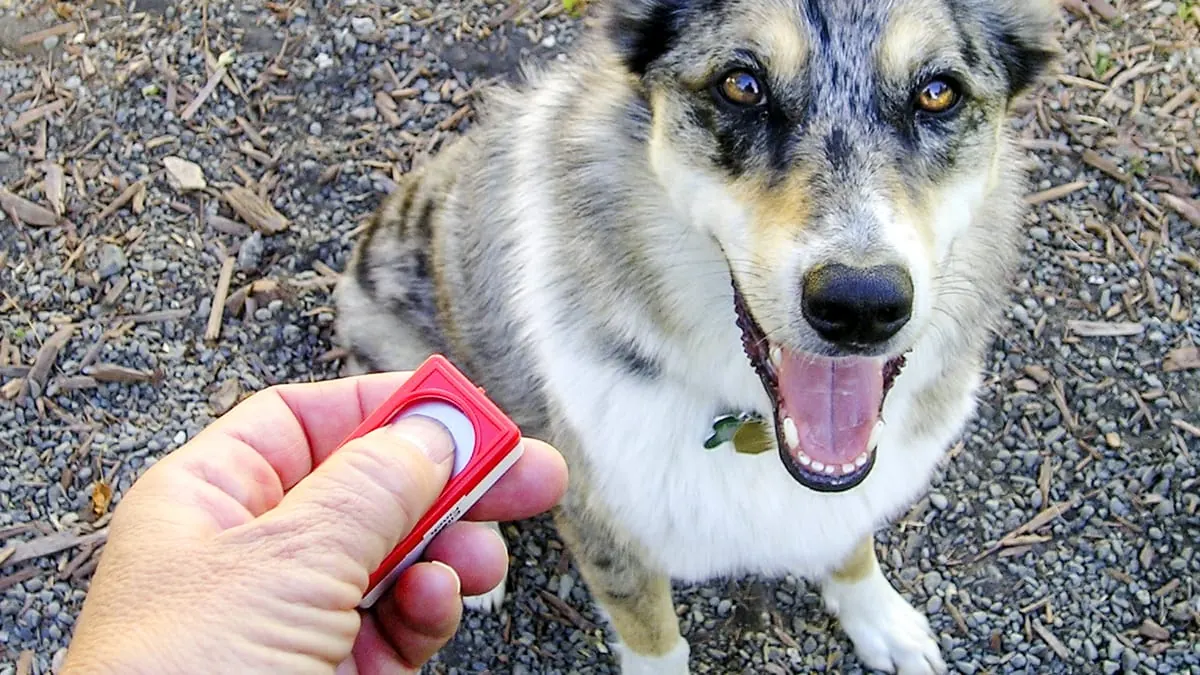
Clicker Training Fundamentals: Markers, Shaping, First Steps
A practical introduction to clicker training: how marker signals work, what shaping really means, and how to run your first short sessions.
Cat Litter Box Problems: Causes and Humane Fixes That Work
A vet-first guide to litter box problems: box count, cleanliness, placement, and telling medical causes from behavioral ones.