One Dog, Several Trainers: Agree on a Household Training Plan
Resolve conflicting household training rules with one observable goal, a shared cue and a reward record, without blaming the dog for unclear instructions.
One person rewards a dog for greeting on the sofa, another asks it to get down, and a third repeats a cue until it loses meaning. Calling the dog stubborn does not identify what the household has taught. Before buying another training aid, agree on the situation, the behavior you want and how each person will respond.
Write one shared training agreement
- Name a situation and an observable behavior rather than a personality label.
- Agree on the cue, reward timing and how each caregiver manages the setup.
- Record comparable attempts and simplify the task when the animal struggles.
Safety concerns, biting or marked fear require appropriate professional support.
Choose one observable outcome
“Be polite” means different things to different people. “Keep four paws on the floor while an adult visitor enters” is something caregivers can observe. Choose a manageable practice setting and an achievable first step. The plan should include how to avoid rehearsing an unwanted behavior when nobody is available to train.
AVSAB's humane-training position supports reward-based methods and rejects aversive methods that use pain, fear or intimidation. Household consistency should therefore mean a clear, humane plan, not everyone agreeing to the same punishment. Medical concerns, fear and safety risks may require professional involvement. [1]
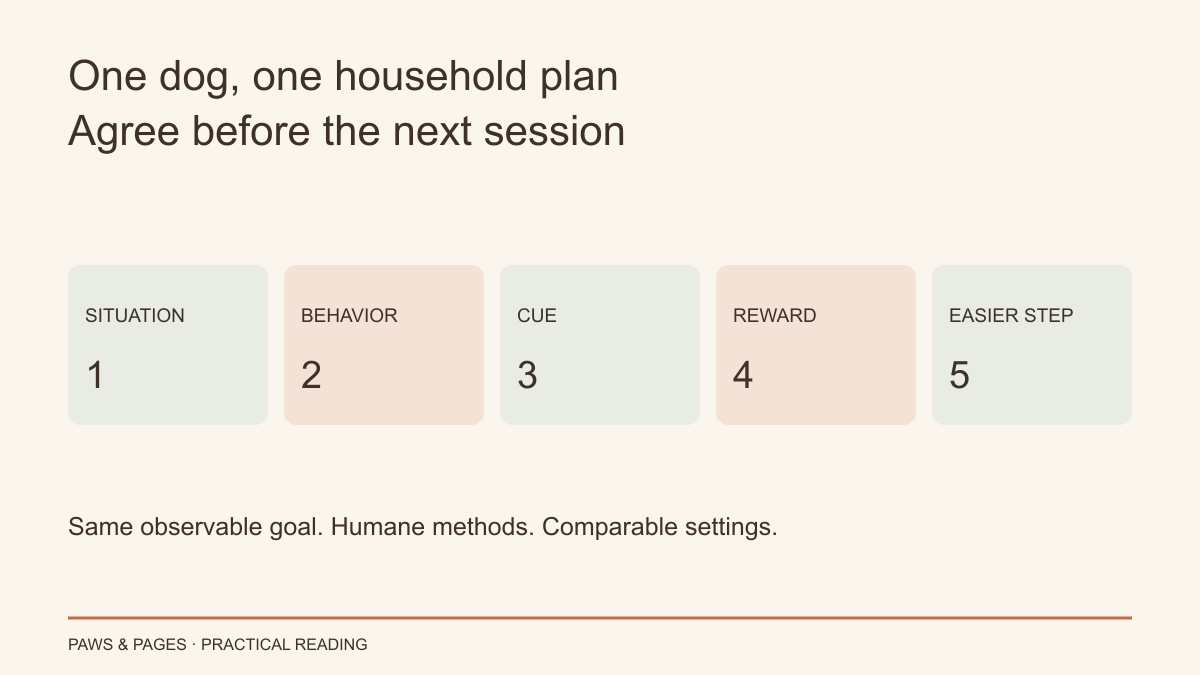
Write a five-line agreement
- Situation: when and where will the practice happen?
- Behavior: what exact action earns reinforcement?
- Cue or marker: which word or signal is used, and at what moment?
- Reward: what is offered and who counts food within the feeding plan?
- Recovery: how will the person make the task easier if the dog struggles?
For a hypothetical greeting exercise, an adult might reward paws remaining on the floor before moving closer to the visitor. Another adult can manage distance or a barrier. If jumping escalates or the dog becomes uncomfortable, the next step is to simplify the situation, not repeat a cue more loudly. This example is not an aggression-treatment protocol.
Compare the setup before comparing the dog
A child arriving home excitedly is not the same practice as a quiet adult entering an empty hallway. Note the visitor, distance, distractions and help provided. A behavior that appears reliable in one setting may need easier practice in another. Avoid deciding that a single setback proves the method failed or that one caregiver has a uniquely disobedient relationship.
Keep a short shared note: what was attempted, what the dog did and what to change next time. Count food rewards with the household's ordinary ration so several short sessions do not silently add several separate treat budgets. Avoid competitive scoreboards that encourage people to push the animal beyond comfort.
Know which disagreement needs help
If the household cannot manage a situation safely, or the behavior involves snapping, biting or marked fear, seek an appropriately qualified professional and veterinary input. Do not ask children to test the plan. For everyday practice, review the agreement after a few comparable sessions and change one element deliberately.
Use the marker-timing guide for technique and My Pet Desk for your shared wording. This article's contribution is the household agreement: a consistent way for several people to teach the same thing.
Sources and further reading
Editorial source notes dated . These source notes support the topics listed below; their date is separate from the article update shown above. This is not a veterinary review or individual medical advice.
Sources checked November 6, 2026; publication dates of sources may be older. Worksheets and hypothetical examples are editorial teaching aids, not individual clinical, legal or insurance advice.
- AVSAB: Current position statements — Reward-based training and avoidance of aversive methods; household worksheet is original editorial material.
More in Training & Behavior
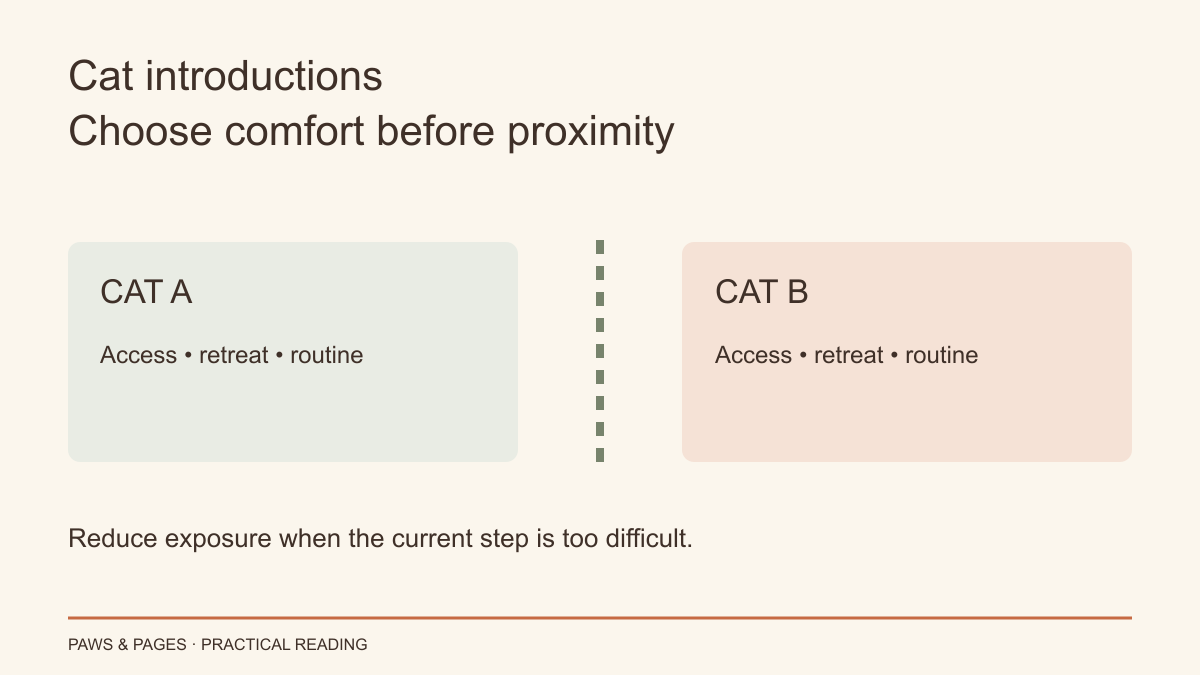
All Training & Behavior →Cat Introductions Going Badly? Choose an Easier Next Step
Use a context-and-response record to step back during cat introductions, protect access to resources and identify when veterinary or behavior help is needed.
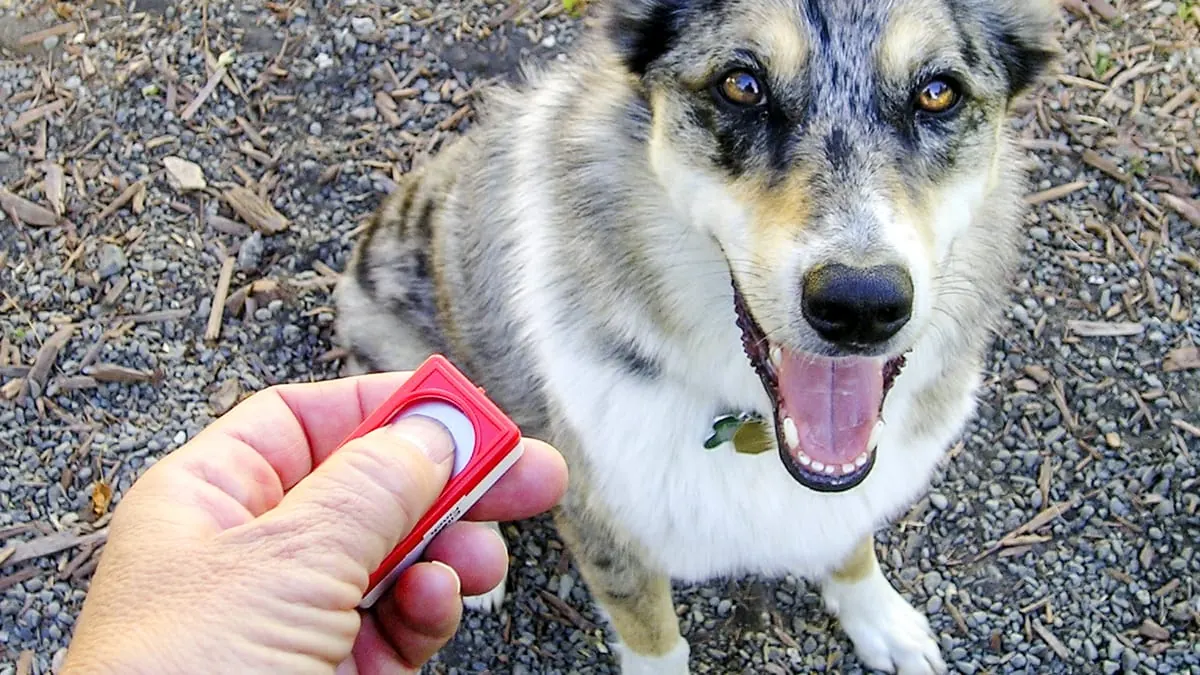
Clicker Training Fundamentals: Markers, Shaping, First Steps
A practical introduction to clicker training: how marker signals work, what shaping really means, and how to run your first short sessions.
Cat Litter Box Problems: Causes and Humane Fixes That Work
A vet-first guide to litter box problems: box count, cleanliness, placement, and telling medical causes from behavioral ones.