Missed a Pet Medicine Dose? Prepare the Right Question
A missed-dose call sheet: record the exact medicine, timing and uncertainty, then obtain product-specific instructions rather than guessing or doubling.
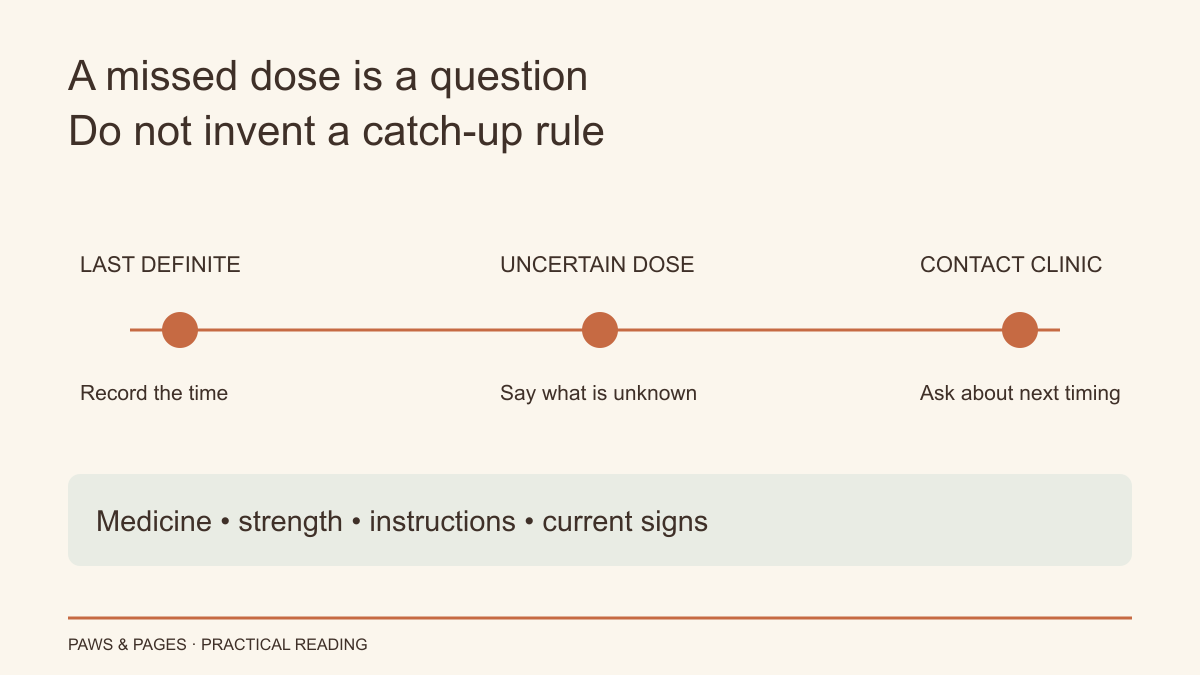
The medicine is still on the counter, but you cannot remember whether the morning dose was given. The tempting response is to pick a rule from the internet: give it now, skip it or double the next one. None is a safe universal answer. The useful first task is to identify exactly what happened and obtain instructions for that prescription and animal.
Prepare a product-specific call
- Have the exact medicine, strength, prescribed instructions and information sheet available.
- Record the last definite administration and distinguish late from possibly already given.
- Ask the veterinary team for the next amount and time; repeat the instruction back.
Do not improvise a doubled or catch-up dose. Suspected overdose needs prompt advice.
Find the product before doing arithmetic
Read the container rather than recalling its color. Record the medicine name, strength, formulation, prescribed amount and interval. Include whether it is a tablet, liquid or another form. If there is a client information sheet or written missed-dose instruction, have that available when contacting the prescribing clinic.
FDA advises owners to ask their veterinarian what to do about a missed dose; the veterinarian can explain the next dose's timing. FDA also distinguishes that question from giving too much medicine. A suspected duplicate dose, wrong product or other exposure needs prompt professional advice rather than being handled as an ordinary omission. [1]
Use a short timeline with honest gaps
Write the last dose definitely given, the dose that is late or uncertain, the current time and when the next dose was planned. Add any food instructions, current signs and other medicines. If someone may already have administered it, say so. “Possibly given at breakfast” is not the same as “definitely missed.” Do not invent a precise time to make the record look complete.
For example, an owner might say: “The label says this amount every twelve hours. Yesterday evening's dose is recorded. Today's morning box is blank, and another caregiver may have given it. It is now mid-afternoon. What should we do about this dose and tonight's?” This is a communication example, not an instruction to wait until afternoon or follow that schedule.
Confirm the whole revised instruction
When the clinic answers, repeat the amount, timing and next scheduled dose in your own words. Ask what signs should trigger another call, and what to do if giving the medicine remains difficult. A change to the next time may affect a household routine, so tell every caregiver and record the instruction once.
If the regular veterinarian cannot be reached and the situation is urgent, contact an emergency animal hospital or an appropriate poison service. FDA is a regulator, not an emergency treatment service. Breathing difficulty, collapse or suspected overdose should not wait for a routine inbox reply. [2]
Prevent a second uncertainty
Use a shared administration record that distinguishes planned from actually given. Mark completion after administration, not when a reminder appears. Keep professional instructions with the medication, and ask for written clarification when the label and your notes differ. My Pet Desk can hold dated notes, but it does not prescribe doses or send background reminders.
Sources and further reading
Editorial source notes dated . These source notes support the topics listed below; their date is separate from the article update shown above. This is not a veterinary review or individual medical advice.
Sources checked November 6, 2026; publication dates of sources may be older. Worksheets and hypothetical examples are editorial teaching aids, not individual clinical, legal or insurance advice.
- FDA: Medications for your pet — questions for your vet — Ask the prescribing veterinarian for product-specific missed-dose instructions.
- FDA: Who to call in a pet emergency — Clinical and emergency contacts; FDA is not a treatment service.
More in Pet Health
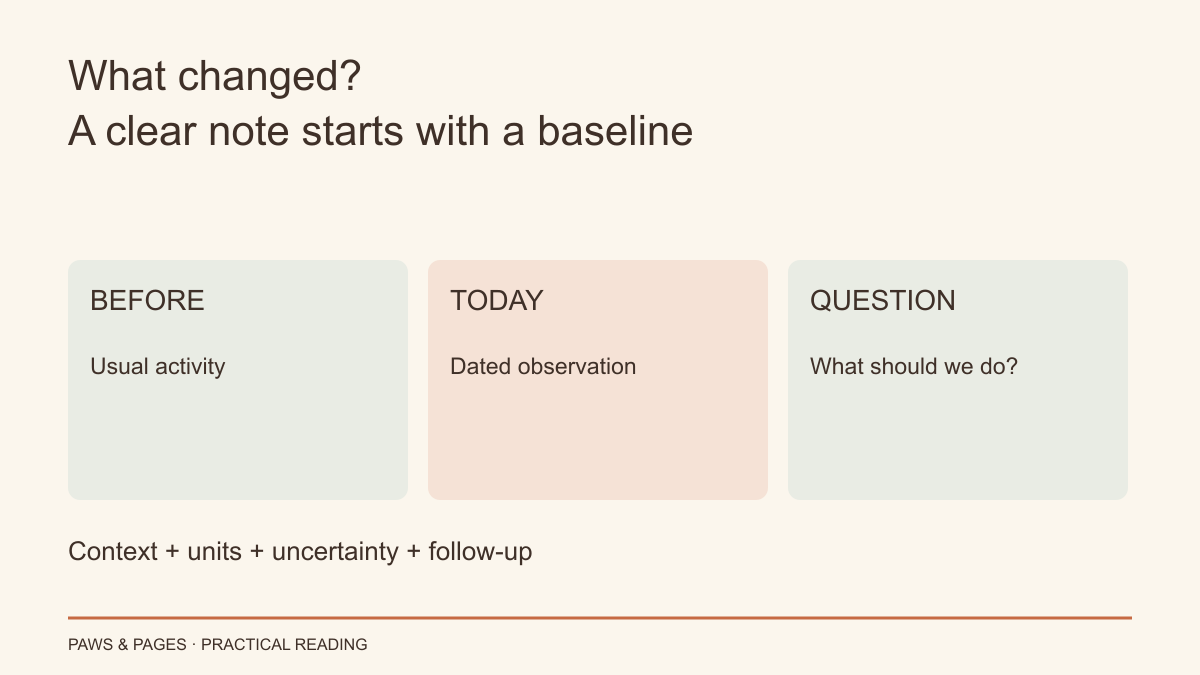
All Pet Health →What Changed? A Clearer Observation Note for Your Vet
Prepare a concise veterinary visit summary with a baseline, dated observations and questions, without turning a home notebook into a diagnosis.
Spay and Neuter Timing: What Current Research Says for Dogs
Spay and neuter timing now depends on breed, sex, and size. What UC Davis research and AAHA guidance suggest for large and small dogs.
Puppy Vaccine Schedule Explained: Core Shots and Timing
AAHA puppy vaccination guidance: the core series, leptospirosis under the 2024 update, risk-based vaccines, and planning doses with a veterinarian.