Reactive Dogs on Leash: Thresholds, Distance, and Progress
Leash reactivity is about emotion, not dominance. How thresholds, distance management, and behavior modification rebuild calm, confident walks.
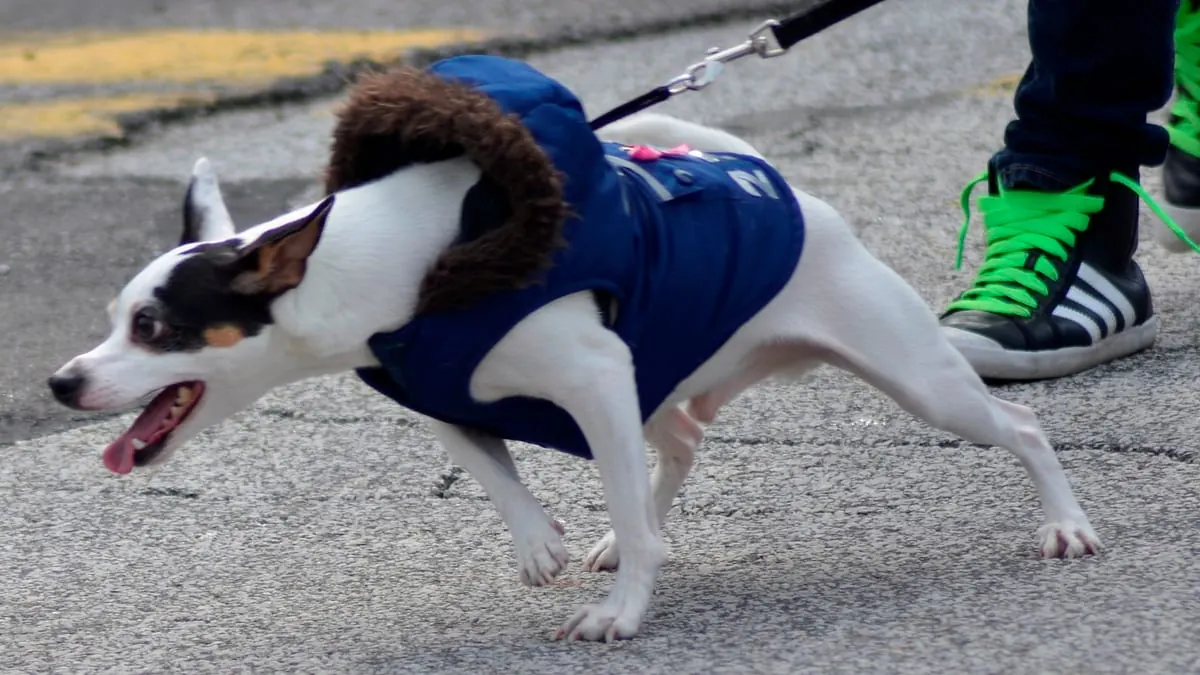
The walk was going fine until another dog rounded the corner. Then came the eruption: barking, lunging, spinning at the end of the leash while you apologize to a stranger who did nothing wrong. If this scene feels familiar, you are not alone—leash reactivity is among the most common complaints trainers hear, and it is also among the most workable when you understand what is actually driving it.
Reactivity and bite risk are separate questions
Reactivity and aggression get used interchangeably, but they are not the same thing. Reactivity describes outsized, explosive responses—barking, lunging, growling—to ordinary triggers like dogs, strangers, cyclists, or skateboards. Some dogs react differently on and off leash, but a reactive display does not establish that an off-leash meeting would be safe. The leash itself changes the equation, and that change is where the solution lives. [1]
Understanding why requires empathy for the dog's position. Off leash, a dog has choices: approach, investigate, avoid, retreat. On leash, those options collapse. A dog who is worried about an approaching stranger cannot create distance; a dog who adores other dogs cannot go say hello. Frustration and fear both end up funneled through the same outlet—a lunging, barking display that says, in effect, "I need more space" or "I want to go there."
Trainers usually sort reactive dogs into two broad emotional profiles, and the distinction shapes the plan. Fear-based reactivity means the trigger genuinely worries the dog, and the goal is building safety and confidence. Frustration-based reactivity means the dog wants access and melts down when the leash says no; the goal there is impulse control and calmer greeting patterns. Some dogs show elements of both, which is another reason cookie-cutter programs fail.
Meet the Threshold
The single most useful concept in reactivity work is the threshold: the distance at which your dog can notice a trigger and still think. Below threshold, a dog can take treats, respond to familiar cues, and recover quickly from small startles. Above it, high arousal can make responding to cues and learning the intended behavior much harder. Sessions spent over threshold are not training at all—they are rehearsal of the explosion.
Thresholds are personal and fluid. One dog may manage a dozen feet from another dog on a quiet morning but need far more space on a busy sidewalk; the same dog's range shrinks when tired, startled, or attached to a tense handler. Learning your dog's tells—a hard stare, a closed mouth, weight shifting forward, suddenly refusing treats—lets you spot the approach to threshold before the barking starts.
The golden rule that follows is simple to state and humbling to practice: work below threshold, always. It is better to succeed a hundred times at a distance than to fail once up close. Progress in reactivity work is measured in calm repetitions at manageable distances, not in how close you can get before the meltdown arrives.
Engineering Better Walks
Management is the unglamorous foundation of every reactivity plan, because it reduces stressful encounters and creates safer opportunities to practice. Practical management includes:
- Choosing quieter routes and walking times while training is underway
- Performing calm U-turns well before the dog locks onto a trigger
- Using parked cars, hedges, and terrain to break line of sight
- Blocking window and fence patrol at home so the dog cannot rehearse from indoors
- Using a secure flat collar or front-clip harness rather than corrective equipment
- Telling neighbors you may be making abrupt turns as you build distance skills
Equipment choices matter here. Choke chains, prong collars, and leash corrections are poor matches for reactive dogs, because pain and discomfort near a trigger tend to deepen the dog's association that triggers predict bad things—and they can suppress the early warning signals that would otherwise tell you trouble is coming.
Changing the Emotional Response
With management in place, behavior modification can begin. The most common approach is desensitization paired with counterconditioning: the trigger appears at a safe, sub-threshold distance, and something wonderful—usually high-value food—appears with it. Repeated consistently, the dog's association shifts from "dog means panic" toward "dog means chicken happens." [2]
Trainers often layer in games such as Look at That, where the dog is rewarded for noticing a trigger and glancing back at the handler, or Behavior Adjustment Training, which lets the dog choose to increase distance and reinforces that choice.
Progress tends to be gradual and nonlinear: a good week, a hard morning, then a breakthrough. Setbacks usually mean the distance was too small, the session too long, or the dog simply needed an easier day. Recovery speed is one of the honest measures of improvement—a dog who comes back from a startle within seconds rather than minutes is genuinely rebuilding her composure.
When to Call for Backup
Self-guided work is reasonable for mild cases, but some situations warrant professional guidance: any history of snapping or biting, reactivity that is escalating rather than improving, a household that cannot reliably manage the dog's safety, or an owner who dreads every walk. A qualified reward-based trainer, or a veterinary behaviorist for complex cases, can build a structured plan—and can help rule out pain, an underappreciated contributor to reactivity that deserves a veterinary exam.
Reactive dogs are not broken dogs. They are dogs with big feelings and too few choices, attached to six feet of nylon in a crowded world. With distance, patience, and consistent reinforcement, the walk stops being a gauntlet and starts becoming what it was always supposed to be: the best part of the day.
Sources and further reading
Editorially reviewed on . Sources support the topics noted below; this is not a veterinary review or individual medical advice.
- Cornell: Managing reactive behavior — Leash reactivity, distance and interpreting triggers.
- AVSAB: 2021 Humane Dog Training Position Statement — Reward-based behavior modification and welfare principles.
More in Training & Behavior
All Training & Behavior →Clicker Training Fundamentals: Markers, Shaping, First Steps
A practical introduction to clicker training: how marker signals work, what shaping really means, and how to run your first short sessions.
Cat Litter Box Problems: Causes and Humane Fixes That Work
A vet-first guide to litter box problems: box count, cleanliness, placement, and telling medical causes from behavioral ones.

Why Cats Scratch and How to Redirect the Behavior
Why cats need to scratch, how to choose and place appealing scratchers, and why behavior support and non-surgical alternatives matter.