Why Cats Scratch and How to Redirect the Behavior
Why cats need to scratch, how to choose and place appealing scratchers, and why behavior support and non-surgical alternatives matter.
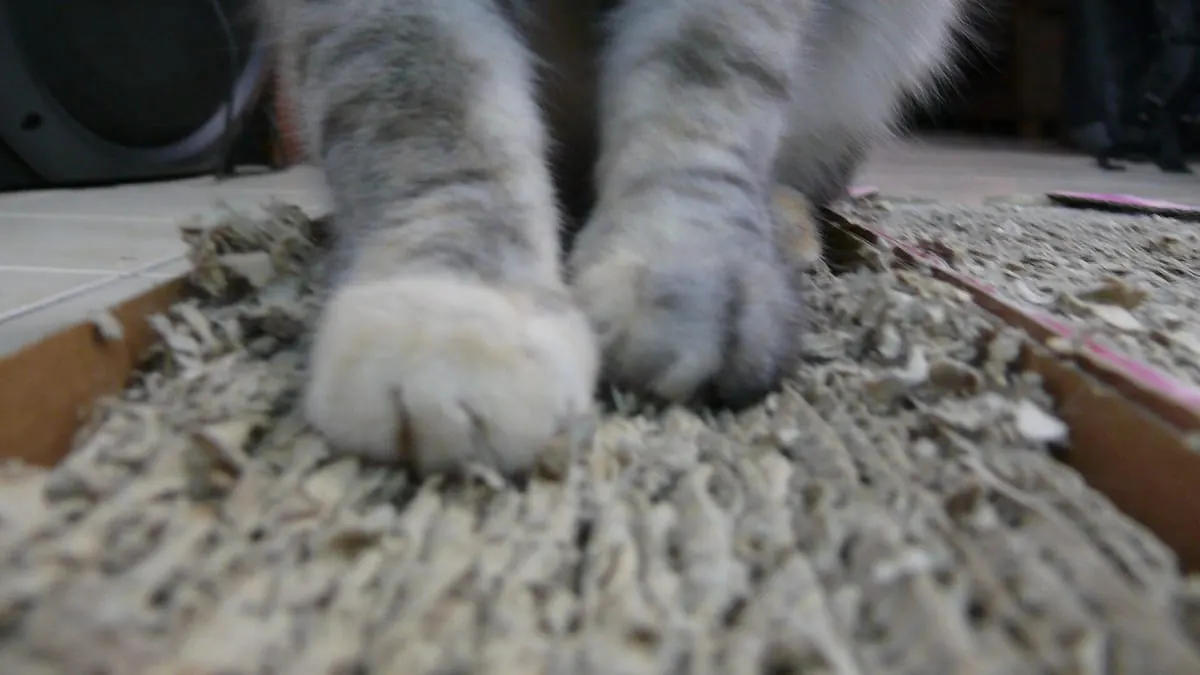
Find the shredded corner of a sofa and you will usually find an owner asking the wrong question. The right question is not "how do I stop my cat scratching?" but "where should my cat scratch instead?" Scratching is a normal, necessary feline behavior—one a healthy cat should never be asked to give up, and one that responds remarkably well to smart redirection.
What Scratching Is For
Cats scratch for several overlapping reasons. The motion strips the worn outer husk from each claw, revealing the sharper claw beneath—you may have found these translucent crescents scattered around the house. Scratching also stretches the muscles of the forelimbs and spine, which is why many cats scratch vigorously right after waking from a nap, and it serves as emotional expression, releasing excitement or stress after a startling event or a long day indoors. [1]
There is a social dimension, too. Glands between a cat's paw pads deposit scent when she scratches, leaving a chemical message alongside the visible mark. Along with urine marking and face rubbing, scratching is part of how cats communicate about territory—outdoors, trees and fence posts carry these messages, and indoors your cat treats the household the same way. Kittens begin scratching remarkably early, while still young, so the habit is established well before most adoptions are finalized.
Because scratching is normal and healthy, the goal is never elimination. Feline behavior organizations are clear that cats need appropriate scratching outlets; punished or suppressed scratching tends to resurface elsewhere, and chronic punishment of a normal behavior adds stress to a cat's life. The realistic goal is redirection—making the right surface more attractive than the wrong one, then letting instinct do the rest.
What Cats Actually Want to Scratch
Cats have opinions about scratching surfaces, and they are not shy about expressing them. Research on scratching preferences and clinical experience converge on a few consistent themes: most cats prefer rough, shreddable textures they can really dig into, with sisal rope a frequent favorite, while corrugated cardboard suits many cats and softer surfaces often appeal to kittens and senior cats. Some cats favor vertical posts; others prefer horizontal pads or angled scratchers, and plenty of cats use both orientations in the same week.
Height and stability matter as well as texture. Offer a post that allows a full stretch and stays secure during use, alongside a horizontal option if the cat prefers that position. Observe the surfaces and locations the cat chooses instead of assuming that the tallest or most expensive product will be preferred. A scratcher that moves unexpectedly may discourage use, so check its base and fixings.
Quantity counts in multi-cat homes. International Cat Care recommends one scratching post per cat, plus one extra for choice, positioned in different locations around the house. Even in single-cat households, a single lonely post tucked in a corner rarely matches the variety of appealing surfaces a home's furniture unknowingly provides.
Placement Is Half the Battle
The most common mistake with scratching posts is location. Cats scratch in socially significant places—near where they sleep, along the routes they patrol, by doors and windows—not in forgotten corners beside the laundry hamper. The smartest placement strategy is unglamorous: put the post directly next to whatever the cat is currently scratching. If that is the arm of the sofa, the post stands beside the sofa arm until the cat has firmly adopted it, and only then does it gradually migrate to a more convenient spot.
Placement should follow function as well as fashion. A scratcher near the cat's favorite sleeping spot catches the post-nap stretch; one near a main entrance serves the cat's marking instinct. In homes where scratching clusters around doorways and windows, behaviorists note the pattern can signal insecurity—worth addressing with more hiding spots, vertical territory, and predictable routines, especially in households with tension between cats.
Making the new surface attractive is straightforward. A dusting of catnip, a toy hung nearby, and praise or a small treat when the cat uses the post all help; synthetic feline pheromone products aimed at scratching can add encouragement.
The reverse also applies: temporarily covering targeted furniture corners, or applying double-sided tape, makes the wrong surface less appealing without frightening anyone. Punishment—squirting water, yelling, scruffing—teaches nothing except that you are unpredictable, and it risks damaging the very bond you are trying to protect.
The Declawing Question
For decades, some owners resolved scratching conflicts by declawing. It is worth being clear about what the procedure is: onychectomy amputates the last bone of each toe—comparable, critics note, to cutting off a human finger at the last knuckle. Veterinary and welfare organizations including the American Association of Feline Practitioners and the American Animal Hospital Association oppose elective declawing, citing risks such as chronic pain, nerve damage, litter box problems, and increased biting.
Declawing restrictions vary by jurisdiction and can change. Check the current law where the cat lives rather than relying on an incomplete state list. For household scratching, FelineVMA provides non-surgical alternatives including suitable scratching surfaces, reward-based redirection and appropriate claw care; discuss painful or abruptly changed scratching behavior with a veterinarian. [2]
The trend reflects a simple consensus: scratching can be redirected humanely, so amputating toes for the sake of furniture is no longer defensible. Trim nails regularly, provide appealing scratchers in the right places, reward use generously—and the sofa, the cat, and the carpet can all survive one household together.
Sources and further reading
Editorially reviewed on . Sources support the topics noted below; this is not a veterinary review or individual medical advice.
- Cornell Feline Health Center: Destructive behavior — Normal scratching behavior and redirection.
- FelineVMA: Alternatives to declawing — Non-surgical alternatives and appropriate claw care.
More in Training & Behavior
All Training & Behavior →Clicker Training Fundamentals: Markers, Shaping, First Steps
A practical introduction to clicker training: how marker signals work, what shaping really means, and how to run your first short sessions.
Cat Litter Box Problems: Causes and Humane Fixes That Work
A vet-first guide to litter box problems: box count, cleanliness, placement, and telling medical causes from behavioral ones.
Separation Anxiety in Dogs: Signs, Desensitization, and Real Help
How to recognize true separation anxiety in dogs, use gradual desensitization, and know when a veterinary behaviorist should step in.