New Food, Uneaten Bowl: What to Record Before Another Change
Separate a food-transition problem from reduced intake. Use a meal record and timely veterinary advice rather than repeated swaps or a hunger standoff.
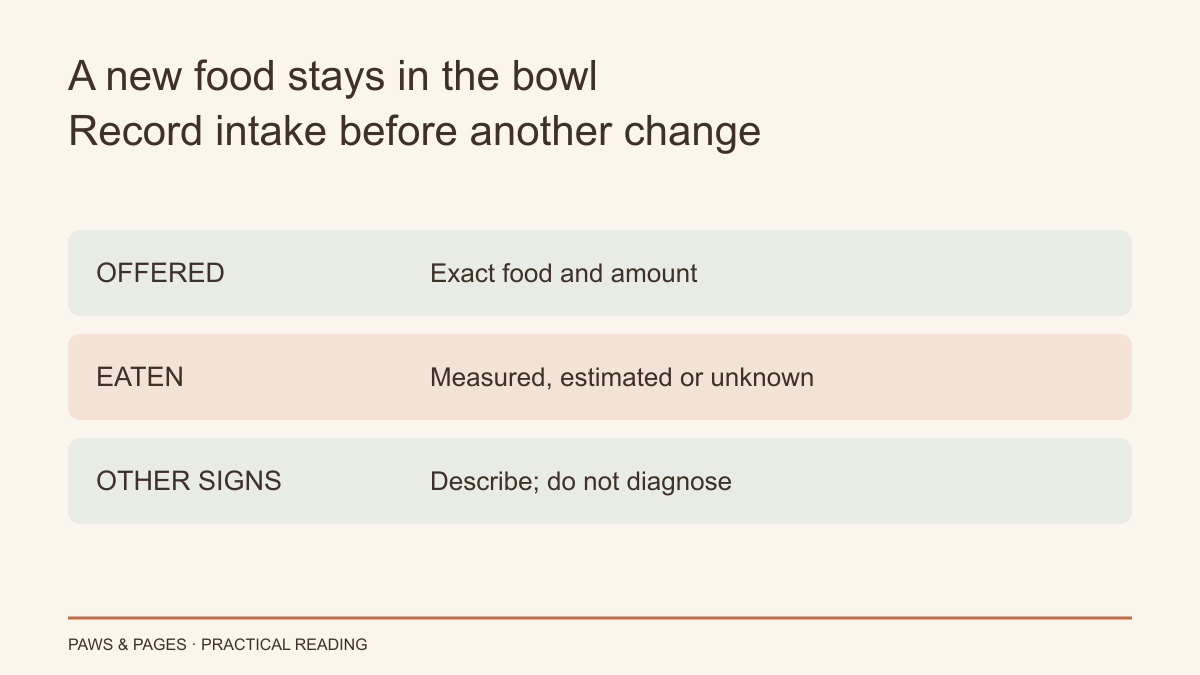
You begin a food transition, and the new mixture stays in the bowl. Is the animal rejecting a texture, finding the feeding area uncomfortable or becoming unwell? The timing of a food change is useful context, but it does not establish the cause. Start with what is actually being eaten and how the animal otherwise appears.
Record intake before another change
- Distinguish the products and amounts offered from what was actually eaten.
- Note other foods, the feeding setting and any additional signs.
- Ask the veterinary team what to offer, when to report back and what needs earlier attention.
Do not withhold food to force acceptance or assume appetite loss is merely preference.
Separate food offered from food eaten
Write down the exact old and new products, their proportions, the amount offered and what remains. Record treats and another pet's accessible food separately. “The bowl was filled” is not evidence of intake. If several animals share the feeding area, say when you cannot tell which one ate.
Keep the record short enough to use: time, food and amount, approximate intake, other observations. A hypothetical entry might read “evening: usual bowl plus new texture; ate some familiar pieces, left the rest; amount uncertain.” This is more honest than assigning a precise percentage from a glance.
Check the setting without assuming it explains everything
Cornell notes that noise, other animals, dirty containers and nearby litter boxes can deter cats from eating. It also emphasizes that food choice needs to meet nutritional requirements. Consider whether access or the environment changed, but do not use an environmental explanation to dismiss a sustained loss of appetite. [1]
For an otherwise comfortable animal, ask the veterinary team whether to pause or adjust the transition and which familiar food is appropriate while doing so. This matters when the new diet was prescribed: returning to the old food without discussing the reason for treatment may defeat the plan. Avoid making several simultaneous changes that leave nobody able to interpret the result.
Do not turn acceptance into a contest
A cat refusing food needs timely veterinary advice. Cornell explains that appetite loss can have multiple underlying causes and can itself lead to serious consequences. Do not withhold all alternatives for days to force acceptance, and do not force-feed without clinical instructions. A guide cannot set a universally safe waiting period for every age or condition. [2]
For dogs too, contact the veterinary team about substantial or persistent reduced intake, particularly with other signs or an existing condition. Marked deterioration, difficulty breathing or another urgent concern takes priority over this worksheet. Tell the clinic about medicines and the reason for the diet change.
Leave the conversation with a next step
Ask which food to offer, what observations matter, when to report back and what should trigger an earlier call. Record those instructions instead of creating your own daily progression. Save a dated note in My Pet Desk; an unrecorded meal should remain unknown, not become a zero-intake diagnosis. The useful outcome is an agreed plan with follow-up, not a perfect-looking transition chart.
Sources and further reading
Editorial source notes dated . These source notes support the topics listed below; their date is separate from the article update shown above. This is not a veterinary review or individual medical advice.
Sources checked November 6, 2026; publication dates of sources may be older. Worksheets and hypothetical examples are editorial teaching aids, not individual clinical, legal or insurance advice.
- Cornell: Feeding your cat, updated April 30, 2026 — Feeding environment, complete diets and individual food acceptance.
- Cornell: Anorexia — Appetite loss requires attention to the underlying cause; no forced-feeding plan is provided here.
More in Nutrition
All Nutrition →Pet Food Calories: Convert kcal/kg, Cups and Cans Correctly
Four worked label calculations show how to convert food energy units, avoid a thousand-fold error and keep portions separate from calorie prescriptions.
How Pet Food Recalls Work and How to Check Your Bag
From FDA oversight to lot codes on the label, a plain-language guide to pet food recalls and the steps to take if your bag is affected.
Cat Hydration: Wet vs. Dry Food and Your Cat's Water Needs
Why cats have a low thirst drive, how wet and dry food differ in water content, and what hydration means for feline urinary and kidney health.