Ragdoll Cat Breed Profile: Size, Blue Eyes and Temperament
Ragdoll cat facts: size, blue eyes, colorpoint coat, laid-back temperament, grooming and health notes, and who this gentle breed suits.
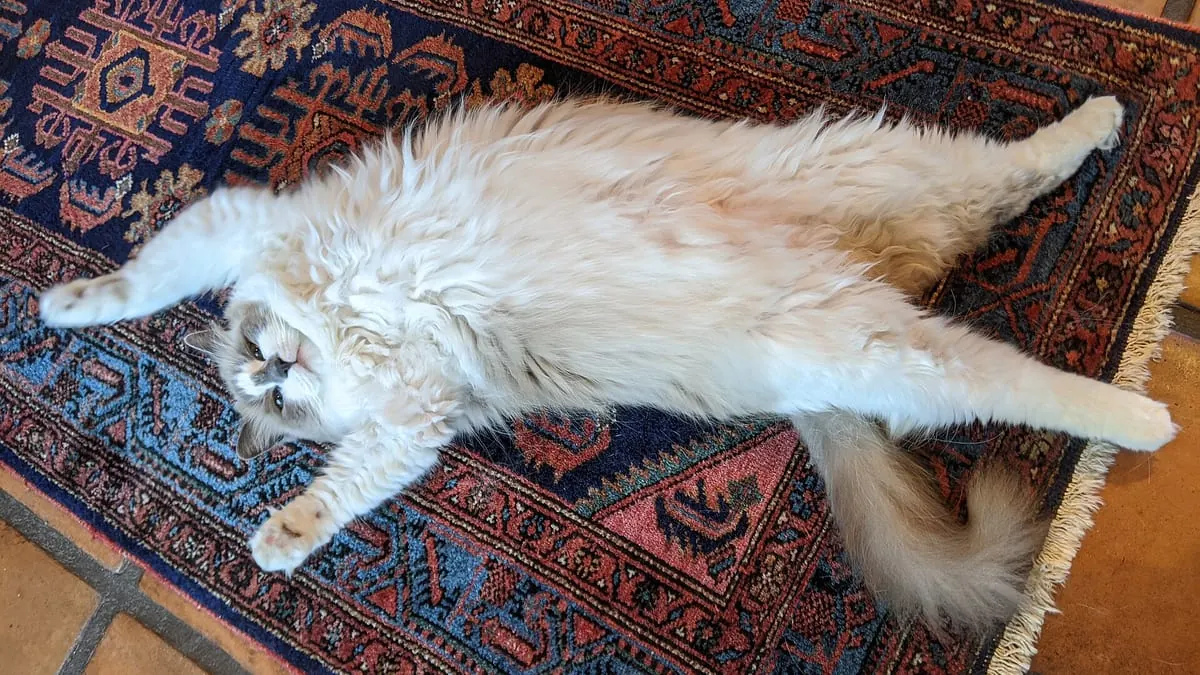
The Ragdoll is the cat world's gentle giant: a large, semi-longhaired breed with striking blue eyes, a colorpoint coat, and a reputation for going completely relaxed when picked up — the floppy behavior that gave the breed its name. According to the Cat Fanciers' Association, the ideal Ragdoll is a well-balanced cat with no extreme features: affectionate, intelligent, and famously laid back.
Bred deliberately for temperament as much as looks, Ragdolls have become one of the most popular pedigreed cats in the world. This profile reviews the breed's unusual origin, its size and coat, its famously people-oriented personality, its care requirements, and the health notes veterinary sources attach to it.
A breed born in California
The Ragdoll is a young breed with a modern origin story. In the 1960s, a breeder named Ann Baker worked in Riverside, California, with a white domestic longhaired female named Josephine, a free-roaming cat whose kittens displayed unusually trusting, docile temperaments. By selecting for that placid character alongside the colorpoint pattern and large size, Baker created a new breed from near-ordinary beginnings, as CFA breed histories recount. [1]
The breed's name is descriptive: many Ragdolls go limp and relaxed when lifted, like a child's rag doll. Registries took notice over the following decades, and the breed achieved championship status in the Cat Fanciers' Association in 2000; it is also fully recognized by The International Cat Association.
Unlike breeds shaped by centuries of barnyard survival, the Ragdoll was designed from the start to be a house cat — trusting, unaggressive, and deeply attached to people. That design shapes every recommendation about its care, including the strong advice from registries that Ragdolls live indoors.
Big, blue-eyed and pointed
Ragdolls are among the largest domestic cat breeds. According to CFA information, altered males usually weigh 15 to 20 pounds at maturity, with females proportionately smaller at roughly 10 to 15 pounds — an overall range of about 10 to 20 pounds. They are slow to mature, reaching full coat color at about two years and full size and weight at four.
The breed is a pointed cat: the body is lighter in color than the face, ears, legs, and tail, which carry the darker points. CFA recognizes four patterns — colorpoint, with no white; mitted, with white feet and chin; bicolor, with a white inverted V on the face; and the largely white van pattern — in six colors from seal and blue to chocolate, lilac, red, and cream.
In the pointed Ragdoll standard described here, the eyes are blue — large, vivid blue ovals, in the words of the CFA standard — and the coat is semi-long, plush, and silky, with less dense undercoat than some other longhaired cats. Individual coats still shed and can tangle, so regular grooming remains necessary.
The laid-back personality
CFA's breed standard opens with the phrase a very laid back cat, and owners would add: a very people-oriented one. Ragdolls tend to greet their owners at the door, follow them from room to room, flop on laps, and generally choose to be wherever their humans are. Many learn to come when called and to play fetch, CFA notes.
The breed is gentle in play, typically without extending claws, and generally tolerant of respectful children and calm households. Ragdolls tend to be floor cats rather than acrobats, preferring to supervise from the ground or the sofa rather than the top of the refrigerator.
Two temperament caveats follow. First, the same trust that makes the breed endearing makes it vulnerable outdoors; a friendly, non-defensive cat should not be left to roam. Second, the breed's social nature means it notices solitude — Ragdolls generally do best in homes where people, or a companion animal, are usually around.
Care: coat, environment and enrichment
Grooming is easier than the plush coat suggests. CFA advises regular combing with a steel comb to remove loose hair and tangles; because the coat lacks a thick undercoat, matting is uncommon with routine care. Seasonal shedding still occurs, and more frequent combing during those weeks keeps both cat and furniture happier.
CFA's breed brochure is direct about environment: keeping the breed indoors, providing scratching posts for natural scratching behavior, and neutering or spaying are described as essential elements of a healthy, long life. Beyond that, Ragdolls need what every indoor cat needs — litter boxes kept clean, fresh water, daily play sessions, and window perches for watching the world safely.
Enrichment should respect the breed's style. Gentle interactive toys, short fetch games, food puzzles, and calm training sessions suit a cat that is intelligent but unhurried. The breed's slow maturation means kittens and young adults keep growing for years, so feeding and play should follow veterinary guidance through each life stage.
Health notes and the right home
Ragdolls are generally robust, and with good care many live well into their teens. Veterinary literature does, however, identify hypertrophic cardiomyopathy — a disease causing thickening of the heart muscle — as a condition seen in the breed, and prospective owners should ask how breeding cats are screened. A genetic test covers particular variants; a negative result does not exclude every cause of heart disease. These are informational notes rather than diagnoses: any cat that breathes rapidly at rest, seems lethargic, or changes appetite should see a veterinarian promptly. [2]
Routine preventive care applies as for any cat: regular veterinary examinations, vaccinations, dental attention, and weight management, since a large frame plus indoor living makes obesity the easy default. A veterinarian can tailor diet and exercise advice to the individual cat, and owners of pedigreed cats can ask breeders about any health screening of the parents.
The Ragdoll suits families, first-time cat owners, apartment dwellers, and anyone who wants an affectionate, undemanding companion that participates in daily life without demanding the rooftops. Owners who want an independent, outdoor-roaming cat should choose differently. For those who want a blue-eyed shadow that greets them at the door, the Ragdoll remains hard to beat.
Sources and further reading
Editorially reviewed on . Sources support the topics noted below; this is not a veterinary review or individual medical advice.
- CFA: Ragdoll breed profile — Breed origins, appearance, patterns and care.
- Cornell Feline Health Center: Hypertrophic cardiomyopathy — HCM risk, screening limitations and veterinary assessment.
More in Breeds
All Breeds →Mixed-Breed Dogs: What Shelters and Genetics Tell Us
An evidence-based look at mixed-breed dogs: longevity and genetic studies, hybrid vigor, size unpredictability, and the shelter adoption picture.
Maine Coon Cat Breed Profile: Size, Coat and Temperament
An editorial Maine Coon cat profile covering size, shaggy coat, gentle temperament, origin lore, grooming and health notes, and who this breed suits.
Cavalier King Charles Spaniel Profile: Temperament and Heart Health
Cavalier King Charles Spaniel profile: AKC size, temperament, grooming, mitral valve disease notes, and who this toy spaniel suits best.