What Changed? A Clearer Observation Note for Your Vet
Prepare a concise veterinary visit summary with a baseline, dated observations and questions, without turning a home notebook into a diagnosis.
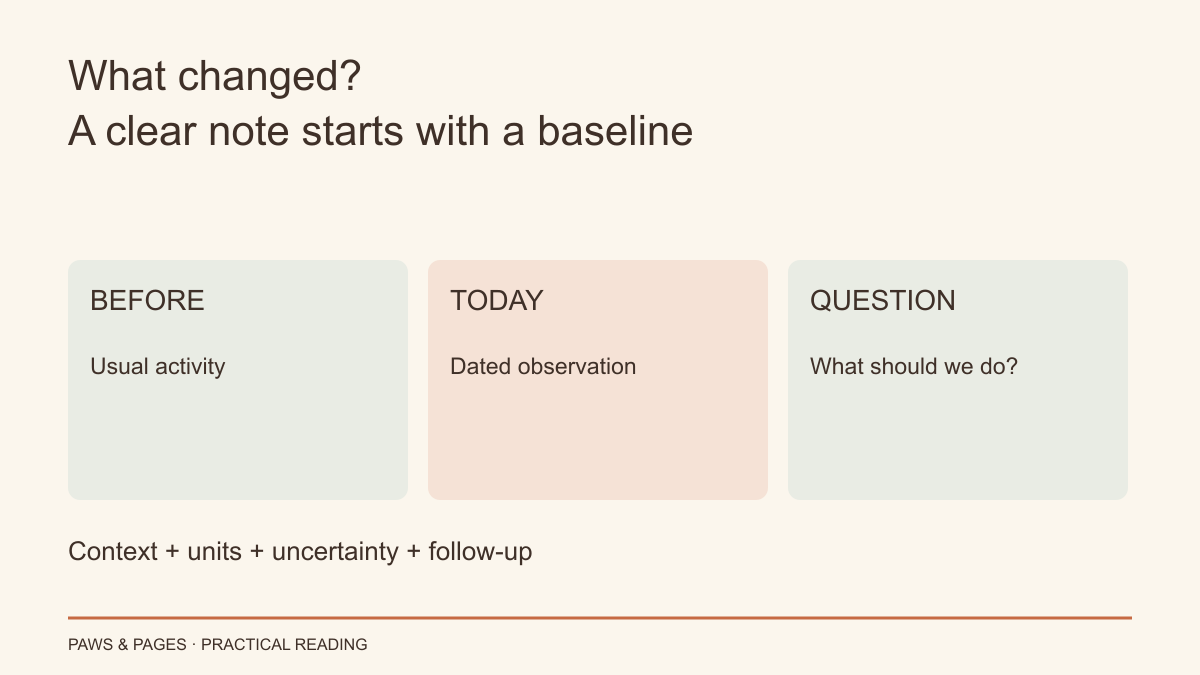
At home, the change seems obvious. In the examination room, “not quite themselves” can be difficult to explain. A useful note gives the veterinary team a starting point: what is different, when it began, what you actually observed and what you are worried about. It does not need a medical label or a long diary.
Make a short appointment handoff
- Describe one normal activity and the actual change you observed.
- Add the time, context, measurement units and any uncertainty.
- Bring current medicines and your priority questions, then record the agreed follow-up.
Do not stage a symptom or delay urgent care to complete a notebook.
Describe the baseline before the exception
Begin with an ordinary activity you know well. Rather than “less active,” write what the animal usually does and what happened differently: “Normally walks to the door for breakfast; today remained on the bed until called.” That is a hypothetical example of wording, not evidence of a particular illness. Keep the distinction between a single observation and a repeated pattern.
Include the animal's existing conditions, medicines and recent changes in the packet you bring. FDA's medication-error guidance emphasizes sharing relevant information with the veterinarian, especially when a new prescription or unfamiliar clinician is involved. An accurate product list is more useful than descriptions such as the little white tablet. [1]
Use one line per observation
A practical format is: date and approximate time; context; observation; what happened next. Put interpretations in a separate question. “Drank from the bowl three times while I was in the kitchen” does not establish an unusually large daily water intake. “Could this change matter?” is an appropriate question; “kidney disease confirmed by drinking” is not an observation.
Record measured values with units and how they were obtained. If you weigh food, distinguish offered from eaten. If an entry is missing, leave it unrecorded rather than writing zero. Tell the clinic when a number is an estimate. A neat spreadsheet with uncertain inputs can create more confusion than a short, candid note.
Choose useful media without staging symptoms
Ask whether an ordinary short video or photograph would help. Preserve the original date and explain the circumstances. Do not make an animal repeat a painful movement, provoke a behavior or delay assistance while trying to capture the perfect clip. A video is supplementary information, not a substitute for the examination.
Choose two or three priorities for the appointment: the main change, any medication question and the practical decision you need to make. Keep a longer history available without requiring the clinician to read pages before understanding why you came.
Know when the notebook should wait
Contact the clinic or emergency service promptly for an urgent concern. FDA directs owners needing urgent veterinary advice to their veterinarian, an emergency animal hospital or a suitable animal poison service, rather than its regulatory inbox. Do not finish a diary before making that call. [2]
After the visit, add the agreed next step, recheck arrangement and instructions for deterioration. Keep the clinician's conclusions distinct from your observations. The observation notebook can preserve that handoff for your next conversation; it does not classify symptoms or generate a health score.
Sources and further reading
Editorial source notes dated . These source notes support the topics listed below; their date is separate from the article update shown above. This is not a veterinary review or individual medical advice.
Sources checked November 6, 2026; publication dates of sources may be older. Worksheets and hypothetical examples are editorial teaching aids, not individual clinical, legal or insurance advice.
- FDA: Veterinary medication errors — Accurate medicine information and communication with the veterinarian.
- FDA: Who to call in a pet emergency — Urgent veterinary advice should come from clinical or emergency services.
More in Pet Health
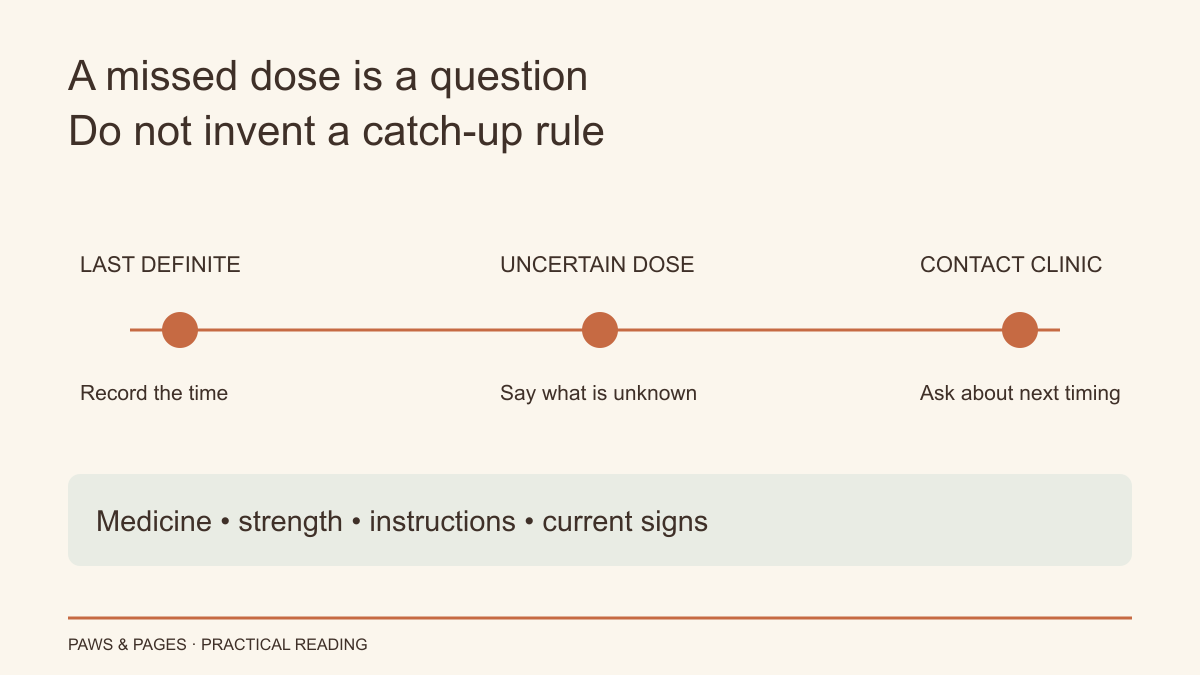
All Pet Health →Missed a Pet Medicine Dose? Prepare the Right Question
A missed-dose call sheet: record the exact medicine, timing and uncertainty, then obtain product-specific instructions rather than guessing or doubling.
Spay and Neuter Timing: What Current Research Says for Dogs
Spay and neuter timing now depends on breed, sex, and size. What UC Davis research and AAHA guidance suggest for large and small dogs.
Puppy Vaccine Schedule Explained: Core Shots and Timing
AAHA puppy vaccination guidance: the core series, leptospirosis under the 2024 update, risk-based vaccines, and planning doses with a veterinarian.