Health-Tested Parents: Which Records Should You Actually Check?
A practical record-checking workflow for health-tested breeding dogs: identity, tests, results and dates, without mistaking certification for a guarantee.
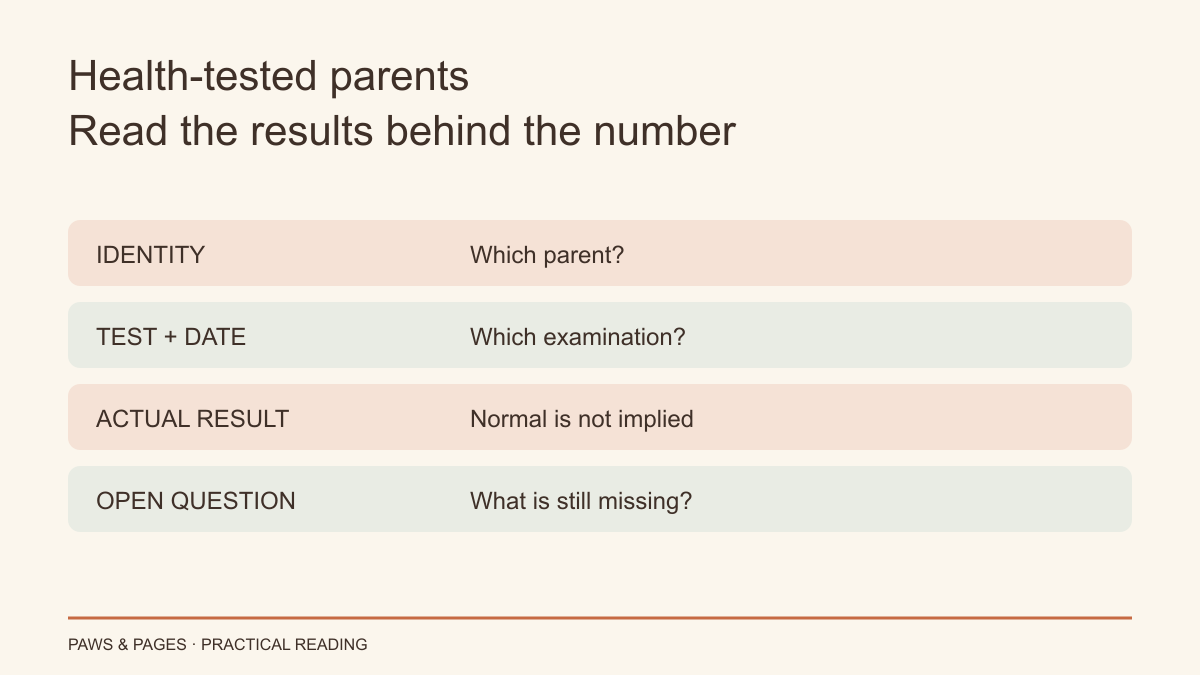
A breeder says both parents are health tested. That may be the beginning of a useful conversation, but it is not yet an answer. Before paying a deposit, you need to know which animals were tested, what was examined and what the results actually say. This guide concerns breeding dogs and the US OFA/CHIC system; cat registries and other countries use different arrangements.
Leave with a traceable evidence file
- Request identifiers and actual examination results for both parents.
- Compare test names and dates with the current requirements for that breed.
- Keep missing, abnormal and normal findings separate and discuss uncertainties independently.
A certificate or screening result does not guarantee future health.
A reference number is a route to evidence
OFA explains that a CHIC number means the breed-specific screening requirements were completed and the results made public. It does not mean every result was normal. Requirements can change, and an existing number is not revoked merely because a breed's protocol later changes. Read the record behind the number rather than treating the badge as an all-clear. [1]
Build a four-column evidence sheet
Use four headings: animal identity; examination or test; result and date; unresolved question. Ask for the registered name and identifier of each parent, then compare those details with the record. A document for a similarly named dog is not evidence for this mating. Save the link and the date you checked it, because a screenshot can omit context or later entries.
Next, compare the listed examinations with the current requirements for that breed. Keep a DNA result separate from an examination of an animal's physical condition. A panel with many genetic markers does not automatically replace the other assessments relevant to the breed. Ask the veterinarian reviewing the documents which findings need interpretation and whether an assessment is age-appropriate or requires updating.
Distinguish missing from abnormal
Suppose a hypothetical folder contains a named parent's hip record and a DNA report, while the seller also claims an eye examination. If the eye record is absent, write “requested, not received,” not “passed” and not “failed.” Ask for the actual result and the identity it belongs to. If an abnormal result appears, ask what it means in context instead of deleting it from the comparison.
Send a short request: “Please provide both parents' identifiers, the relevant examination records and any results not shown in this folder. Which current breed requirements are covered, and what remains untested?” An organized answer is more useful than a general promise of healthy puppies.
Use the evidence to decide what remains unknown
Screening does not predict every future illness or certify the conditions in which puppies are raised. Discuss the records independently, review the written contract and ask about support after placement. Keep welfare, documentation and household suitability as separate questions. The outcome of this exercise is a transparent evidence file, not a numerical health score.
For individual suitability, continue with the household-fit meeting worksheet. A well-documented family history and a workable daily-life match answer different questions.
Sources and further reading
Editorial source notes dated . These source notes support the topics listed below; their date is separate from the article update shown above. This is not a veterinary review or individual medical advice.
Sources checked November 6, 2026; publication dates of sources may be older. Worksheets and hypothetical examples are editorial teaching aids, not individual clinical, legal or insurance advice.
- OFA: CHIC program and policies — Breed-specific screening, public results, identification and limits of a CHIC number.
More in Breeds
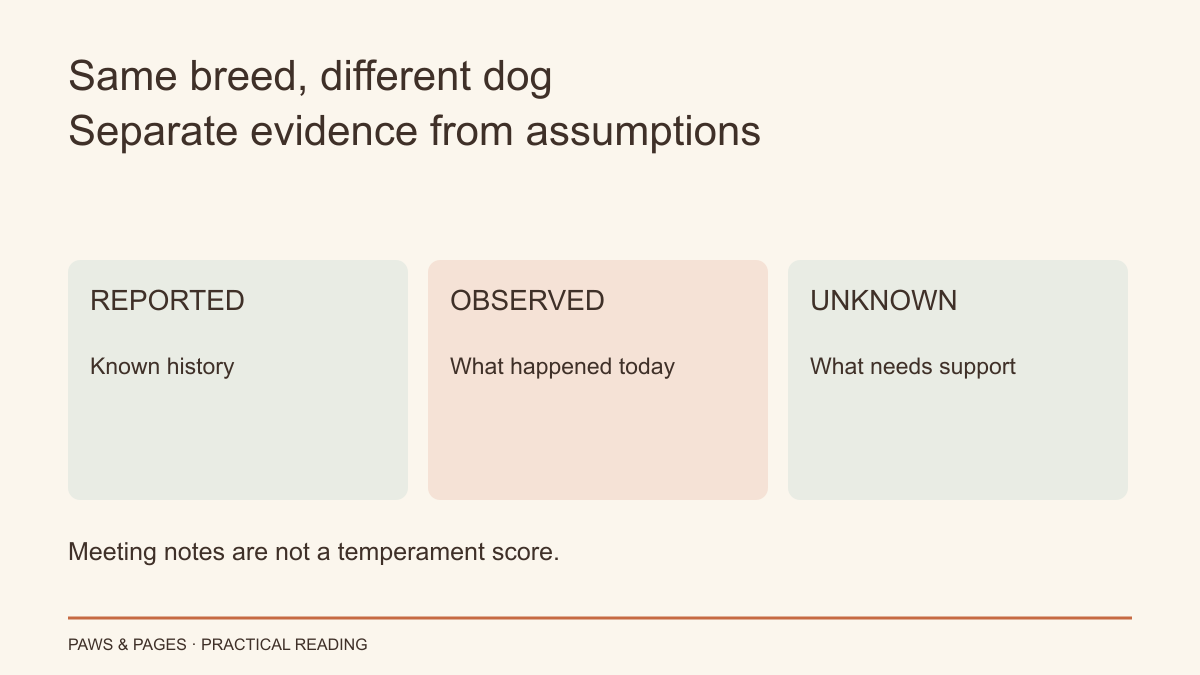
All Breeds →Same Breed, Different Dog: A Household-Fit Meeting Worksheet
Turn a dog meeting into useful observations: separate known history, what you see today and unanswered questions about your everyday household.
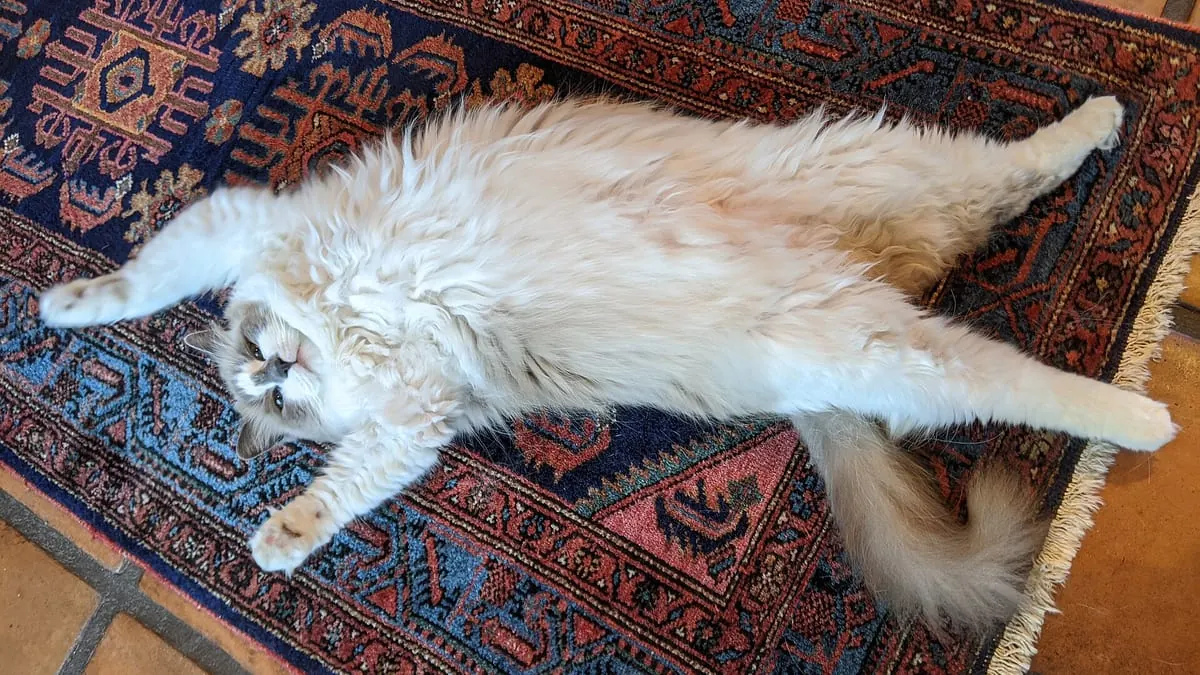
Ragdoll Cat Breed Profile: Size, Blue Eyes and Temperament
Ragdoll cat facts: size, blue eyes, colorpoint coat, laid-back temperament, grooming and health notes, and who this gentle breed suits.
Mixed-Breed Dogs: What Shelters and Genetics Tell Us
An evidence-based look at mixed-breed dogs: longevity and genetic studies, hybrid vigor, size unpredictability, and the shelter adoption picture.