Resource Guarding in Dogs: Signs, Risks, and Humane Help
Growling over a food bowl is communication, not defiance. Learn the signs of resource guarding, why punishment backfires, and when to call a professional.
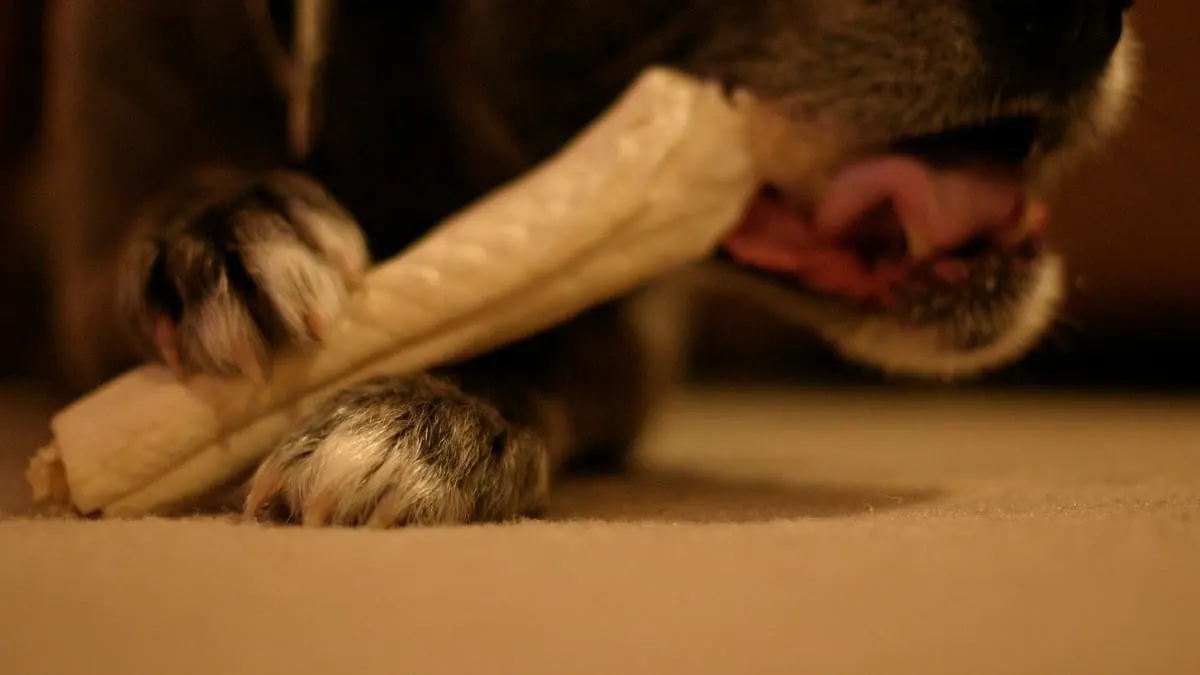
A dog who stiffens over a food bowl, gulps a chew faster when you walk past, or growls when another pet nears the couch is not being dominant or spiteful. She is guarding a resource—and resource guarding is one of the most normal, most misunderstood behaviors in the canine repertoire. Understanding what it is, and what it is not, is the first step toward keeping everyone safe.
A Survival Instinct in Your Living Room
Guarding is, at its root, ancient and adaptive logic: an animal that let others take its food did not last long. Behaviorists note that guarding possessions from people or other animals is normal for dogs, and that the behavior exists on a wide spectrum. At the mild end, a dog may simply eat faster or turn her body slightly away. At the severe end, she may lunge, snap, or bite—and much of practical dog ownership is noticing which end of the spectrum you are actually living with.
The "resource" can be almost anything the dog values: a food bowl, a bully stick, a stolen sock, a favorite resting spot, a doorway, even a preferred person. Value is defined by the dog, not by you—a perfectly social dog who ignores ordinary kibble may still guard one specific toy with the seriousness of a bank vault, which is why assumptions about "harmless" objects invite trouble.
Genetics, early experience, and environment all play roles. Some dogs are simply wired to place high value on possessions; others develop guarding after periods of scarcity or competition with littermates. But the behavior also shows up in dogs with no history of deprivation at all, so owners should resist confident storytelling about causes and focus instead on what to do next.
Reading the Escalation Ladder
Guarding rarely comes without warning. Dogs may show some of the following signals, but they do not follow a reliably predictable sequence, and the earlier rungs are easy to miss if you do not know what to watch for:
- Eating faster or gulping food when a person approaches
- Freezing or going stiff over the item mid-chew
- A hard stare or "whale eye," showing the whites of the eyes
- Body blocking, hovering, or covering the item with a paw or chin
- Lip lifting, low growling, or baring teeth
- Snapping, lunging, or biting if earlier signals are ignored
Every one of those signals is communication, and the growl deserves special respect. A growl is honest, valuable information—a smoke alarm, not a challenge. It tells you exactly where your dog's comfort ends, which is precisely the information any training plan needs in order to work.
Why Punishment Makes It Worse
The instinctive response to a growl—scold the dog, yank the item away, show her who is in charge—is also the most dangerous one. Behaviorists warn that punishment can exacerbate aggression, and veterinary behavior resources are blunt about the mechanism: when you correct a dog for growling, you do not teach her that your approach was safe. You teach her that warning you is dangerous.
Punishment may suppress warning signals without resolving the underlying concern. The next time someone reaches toward the bowl, she may escalate straight to a bite with no warning at all. Punishment also confirms the dog's core fear—that valued things do disappear, and that your approach makes it happen—which feeds the very anxiety driving the behavior. [2]
Popular old-school advice to take the bowl away mid-meal to "show the dog who's boss" deserves particular skepticism. Many dogs with guarding problems have histories of exactly this kind of owner-created conflict. For a young puppy, repeated ambushes over dinner teach her that hands near the bowl predict loss rather than generosity—an instinct the household then spends months trying to reverse.
Management Comes Before Training
The first priority is preventing bites and reducing conflict, not testing what the dog will tolerate. If a dog freezes, growls or threatens, create distance safely; do not remain close to avoid supposedly rewarding a warning. Use barriers and undisturbed feeding, and arrange qualified help for a plan that protects people and the animal. [1]
Practical management looks like this: feed in a calm, low-traffic spot and let the dog eat undisturbed; give high-value chews only when the dog is alone or safely settled; do not chase or corner a dog over stolen items; and use doors and gates to keep tempting objects out of circulation.
The heart of the training plan is desensitization and counterconditioning: teaching the dog that your approach predicts wonderful things rather than loss. Done at the right distance and pace, you step toward the bowl, something better appears—a piece of chicken tossed from a respectful distance—and you retreat. Over many easy repetitions, the dog's emotional forecast flips: a person coming near the bowl means dinner is about to improve, not vanish.
Trading rather than grabbing is the everyday version of that principle. Instead of prizing a stolen shoe from your dog's mouth, offer something better, wait for her to drop it voluntarily, and pick up the shoe while she enjoys her trade. Games like this, along with well-trained "drop it" and "leave it" cues, build a long history of generosity that protects everyone when accidents happen.
When to Bring in a Professional
Some situations call for qualified help rather than a DIY plan. If guarding has already produced a snap or bite, if it is escalating despite careful management, if children or vulnerable adults share the home, or if the behavior appeared suddenly, involve your veterinarian first—sudden behavior changes can signal pain or illness—and then a qualified behavior professional.
Look for a board-certified veterinary behaviorist, a certified applied animal behaviorist, or a trainer with recognized credentials in aggression cases and behavior modification. Resource guarding can absolutely improve with the right plan, but it improves through patience, safety, and changed emotions—not through confrontation. The goal is a dog who relaxes when you approach, because you have proven, one trade at a time, that good things happen when you do.
Sources and further reading
Editorially reviewed on . Sources support the topics noted below; this is not a veterinary review or individual medical advice.
- Merck Veterinary Manual: Behavior problems of dogs — Safety, management of valued resources and professional behavior treatment.
- AVSAB: 2021 Humane Dog Training Position Statement — Welfare concerns about aversive approaches.
More in Training & Behavior
All Training & Behavior →Clicker Training Fundamentals: Markers, Shaping, First Steps
A practical introduction to clicker training: how marker signals work, what shaping really means, and how to run your first short sessions.
Cat Litter Box Problems: Causes and Humane Fixes That Work
A vet-first guide to litter box problems: box count, cleanliness, placement, and telling medical causes from behavioral ones.
Why Cats Scratch and How to Redirect the Behavior
Why cats need to scratch, how to choose and place appealing scratchers, and why behavior support and non-surgical alternatives matter.