Veterinary Workforce Strain: What Shortage Forecasts Can Tell Us
How to read veterinary workforce forecasts, distinguish local access problems from national estimates, and plan care when appointments are difficult to find.
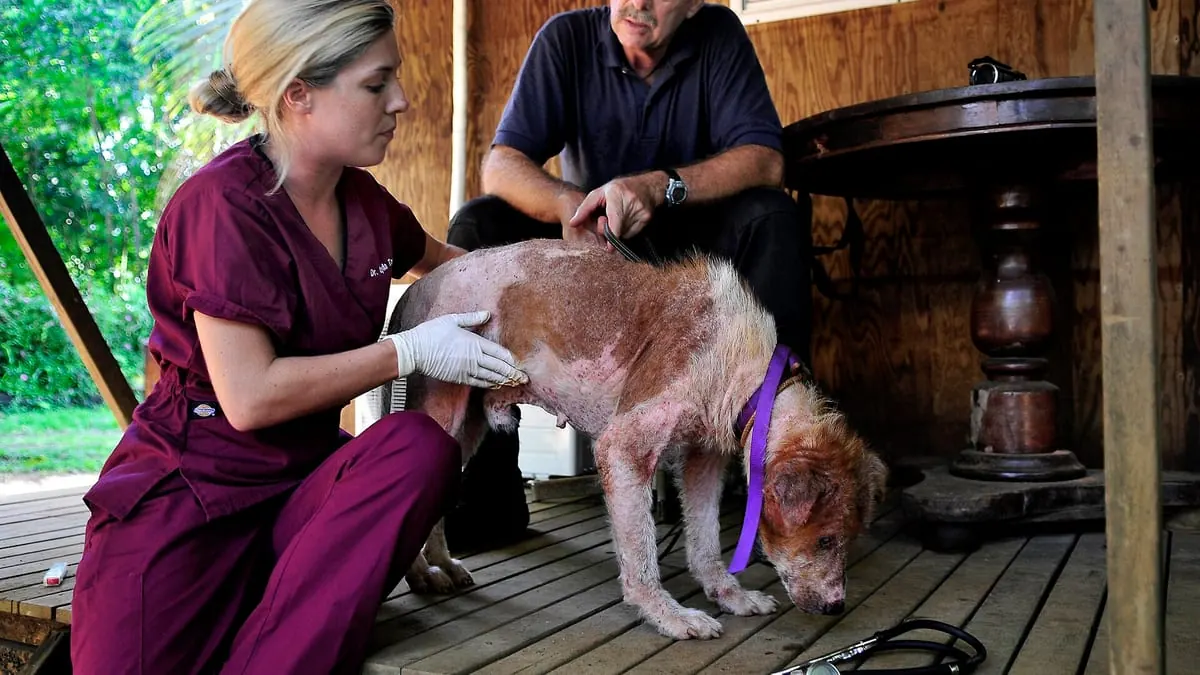
Difficulty finding a veterinary appointment is real for the household experiencing it, but a local waiting list is not a measurement of a national shortage. Veterinary workforce discussions often blend several questions: how many professionals will graduate, where they will work, how many hours they will provide and what kind of care clients will seek. Separating those questions makes the evidence more useful than a single alarming headline.
What the professional schools say
In its June 2024 workforce statement, the Association of American Veterinary Medical Colleges describes workforce challenges while cautioning that projections depend on assumptions. Education, retention, distribution and the way veterinary teams work all affect capacity. That statement is a professional association's assessment, not a count of every unfilled appointment in the country. It should be read with its publication date and purpose in view. [1]
A forecast is a conditional calculation. Its answer changes if more graduates enter practice, professionals retire at a different rate, working hours change or demand grows more slowly than expected. A projection of openings also needs a definition: replacing someone who leaves a job is not necessarily the same as adding a new professional to the national workforce. Those quantities cannot be interchanged without checking the model.
Demand is more than the number of pets
Pet ownership matters, but animals do not all use the same amount of veterinary care. Age, disease, treatment choices, finances and access influence the appointments a household seeks. An owner can need care yet be unable to afford it, so observed visits do not capture every unmet need. Conversely, a rise in spending does not prove more visits occurred; higher prices or a different mix of services can also raise revenue.
This is why a revenue series cannot by itself demonstrate either a solved shortage or a worsening one. To interpret a claim, ask whether it measures transactions, unique patients, clinical hours, vacancies or waiting time. Check the period and the practices included. A survey dominated by a particular region or business model may describe that group well without representing every emergency hospital, rural practice or independent clinic.
Location and clinical role matter
National totals can conceal a difficult local experience. A specialist appointment, an overnight emergency service and a routine vaccine visit require different facilities and teams. An opening at a distant general practice does not create nearby overnight capacity. When comparing access, specify the service and travel distance rather than assuming all veterinary positions can substitute for one another.
Veterinarians are also only part of a functioning hospital. Credentialed technicians, assistants and reception staff contribute different skills, within the rules of their jurisdiction. A practice needs enough support, suitable equipment and a workable schedule to use clinical time effectively. Counting doctors alone leaves out those constraints. At the same time, improving a workflow does not authorize a staff member to perform tasks outside their permitted role.
Retention deserves a separate question
Training more people is a long-term response. Keeping experienced people in sustainable work addresses a different part of the problem. Claims about burnout or turnover need their own sources, sample definitions and dates; they should not be added to a workforce article as if every clinic shares the same rate. A professional leaving one employer may remain in veterinary medicine, while another may reduce hours or leave clinical work entirely.
For a reader evaluating a staffing announcement, ask what changed in patient access. Additional staff may allow longer opening hours, a broader service or a more manageable workload without immediately increasing appointment numbers. Those outcomes are different, and a hiring headline does not establish which occurred. Useful reporting connects the staffing measure with a defined access measure rather than assuming the relationship.
Planning routine care
For a household, start by asking the regular clinic how far ahead to book predictable care and how prescription renewals work. Keep a concise record of diagnoses, medicines, allergies and recent results. If a referral is needed, ask who sends the records, whether the receiving service has them and whom to contact if the animal's condition changes while waiting. Administrative preparation cannot create capacity, but it can prevent avoidable delays.
Ask about cancellation lists and the distinction between a routine opening and urgent triage. Describe symptoms accurately rather than trying to secure a faster appointment by exaggerating them. If the practice directs the animal to emergency care, clarify where that service is and whether it is currently accepting patients. An unanswered online booking request should not be treated as a clinical assessment of a deteriorating animal.
When cost and access overlap
Request a written estimate and ask which parts of the proposed plan are time-sensitive. Discuss financial limits early enough for the clinician to explain medically reasonable options and follow-up needs. A lower initial quote is not necessarily a lower total if it excludes monitoring or further treatment. Availability and affordability should be recorded separately so that a discussion about workforce does not conceal a financial barrier.
Keep the regular clinic's after-hours instructions accessible before an emergency occurs. A general article cannot determine whether a symptom can safely wait, and national workforce projections cannot make that decision either. The most useful response to a difficult booking situation is a specific plan for the animal in front of you: who can assess it, how soon, what records are needed and what change should trigger immediate reassessment.
Sources and further reading
Editorially reviewed on . Sources support the topics noted below; this is not a veterinary review or individual medical advice.
No local clinic survey or first-hand interviews were conducted for this article.
- AAVMC: June 2024 veterinary workforce statement — Workforce uncertainty and the range of approaches to capacity.
More in Industry News
All Industry News →Flying With Pets: Airline Rules and What US Regulators Require
US airline pet rules turn on DOT incident reports, cabin-versus-cargo distinctions and health certificates — and on where federal mandates end.

Pet Insurance Market Growth: What NAPHIA's Data Shows
NAPHIA reports 7.6 million insured North American pets at the end of 2025. What premium growth measures, and what buyers must check in a policy.

CDC Dog Import Rules: Rabies Forms and the Six-Month Age Minimum
CDC dog import rules, in force since Aug 1, 2024: a Dog Import Form, microchip, six-month age minimum, and rabies papers for high-risk travel.